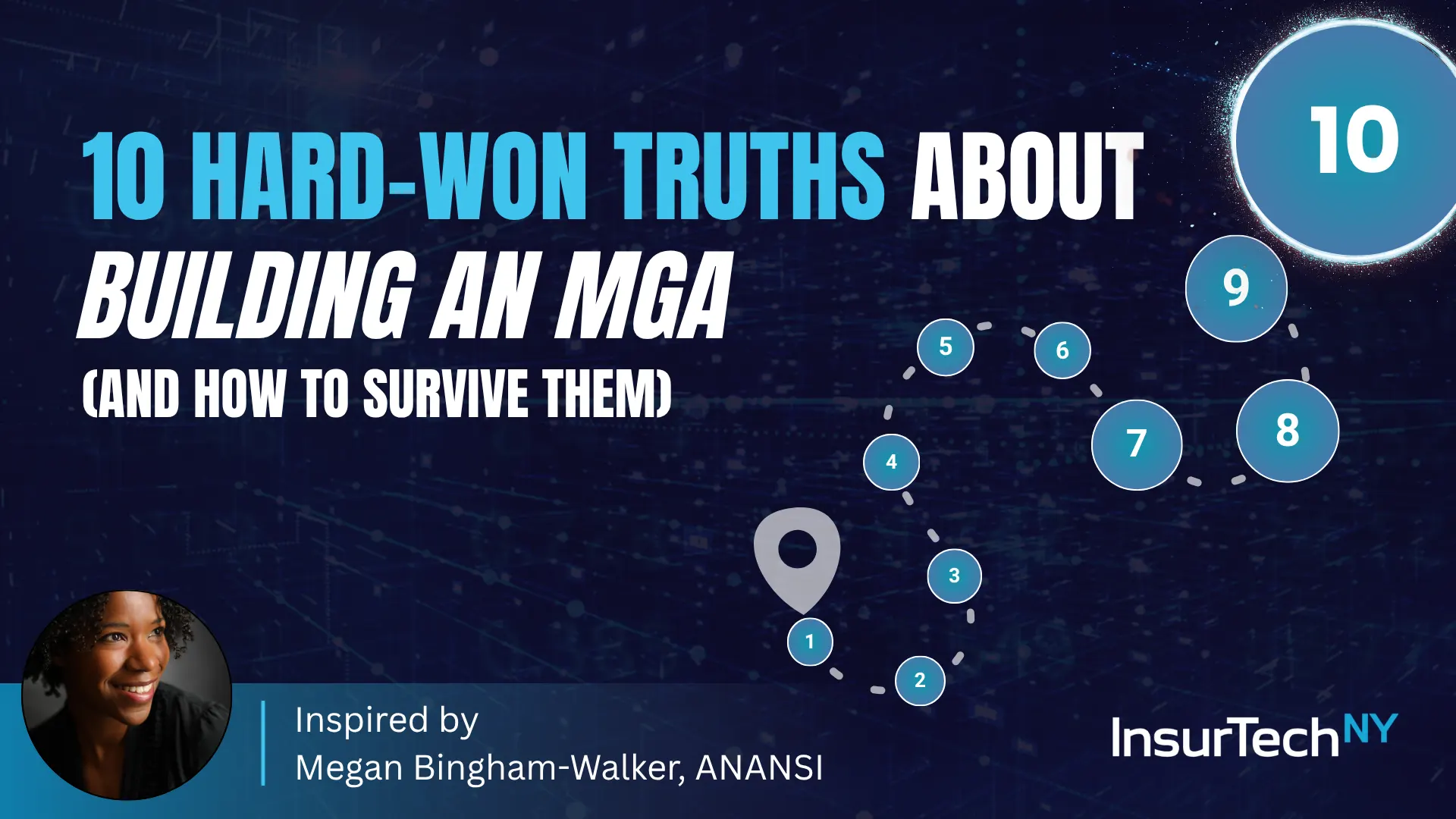
What Every First-Time MGA Founder Learns—Eventually
Launching an MGA is equal parts underwriting discipline, operational plumbing, and reputation management. Below are ten realities many founders meet the hard way—paired with practical moves to keep momentum, protect capacity relationships, and find product-market fit without burning the runway.
Credit: Adapted (with permission) from a widely shared LinkedIn post by Megan Bingham-Walker, CEO & Co-founder of Anansi and a finalist in the 2024 InsurTech NY Startup Competition.
Capacity
1Capacity
Convincing Insurers to Support Innovation Takes Time
(Re)insurers are cautious by design. Securing backing for a new model or vertical often takes 12–18 months of pitching, data-room Q&A, and reference checks.
How to survive: set milestone gates (loss picks, distribution proof, draft binder terms) and build two parallel capacity tracks so one delay doesn’t stall the year.
Operations
2Operations
Timelines Are Unpredictable
Winning capacity isn’t the finish line. Onboarding can take a week…or three…or twelve. Every carrier has a different compliance and reporting playbook.
How to survive: treat onboarding like a program: RACI, weekly risk log, and go/no-go gates for policy admin, bordereaux, cash flow, and reporting schemas.
Product
3Product
You’re Expected to Find PMF on Day One
Most startups iterate. MGAs, unless the contract allows it, can be held to the original rating and thesis—making pivots slow and expensive.
How to survive: negotiate iteration levers (rate/rule endorsements, controlled appetite tests) and capture quote-bind-drop reasons to drive data-backed changes.
Underwriting
4Underwriting
Loss Ratio Discipline Matters Early
An early loss-heavy book can spook capacity and force a restart.
How to survive: senior-review the first 500–1,000 risks, front-load risk selection, and monitor early-warning dashboards for frequency, severity, and drift vs. pick.
Economics
5Economics
It’s a Low-Margin Business
MGA commissions typically land around 10–20% of premium. Profitability needs scale or truly differentiated selection/pricing.
How to survive: automate quote-to-bind, keep expense ratio ruthless, and anchor in narrow niches where your data advantage is obvious.
Customer
6Customer
Customer Trust Is Hard-Won
No one wakes up excited to buy more insurance. If the “why this product, why now” isn’t clear, you lose the sale.
How to survive: lead with outcomes, not jargon; share real claim scenarios; show coverage differences at the exact moment of decision.
Go-to-Market
7Go-to-Market
Sales Cycles Are Slow
Even innovative enterprises slow down when risk and compliance enter the chat.
How to survive: run a two-track motion—strategic enterprise pursuits and faster channels (digital brokers, embedded partners) to avoid single-thread revenue risk.
Security
8Security
Compliance & Data Security Are Not Optional
Insurance data is sensitive. Carriers and regulators expect encryption, access control, auditability, and vendor due diligence from day one.
How to survive: document your data map; implement encryption in transit/at rest, role-based access, audit trails, and prepared DDQs before the first questionnaire lands.
Claims
9Claims
Claims Are Your Brand
Claims are the shop window. Fail there and nothing else matters.
How to survive: product-manage FNOL, define SLAs, invest in triage rules and proactive comms, and surface plain-English claim status to customers and partners.
“Claims are the shop window of insurance. If you fail there, nothing else matters.”
Scale
10Scale
Complexity Compounds Fast
Each new geography or product multiplies compliance, carrier, actuarial, and reporting layers—tough for small teams.
How to survive: expand in a staircase, not a spiderweb. One new dimension at a time; standardize artefacts (wordings, referral rules, schemas); retire experiments that don’t earn their keep.
Program
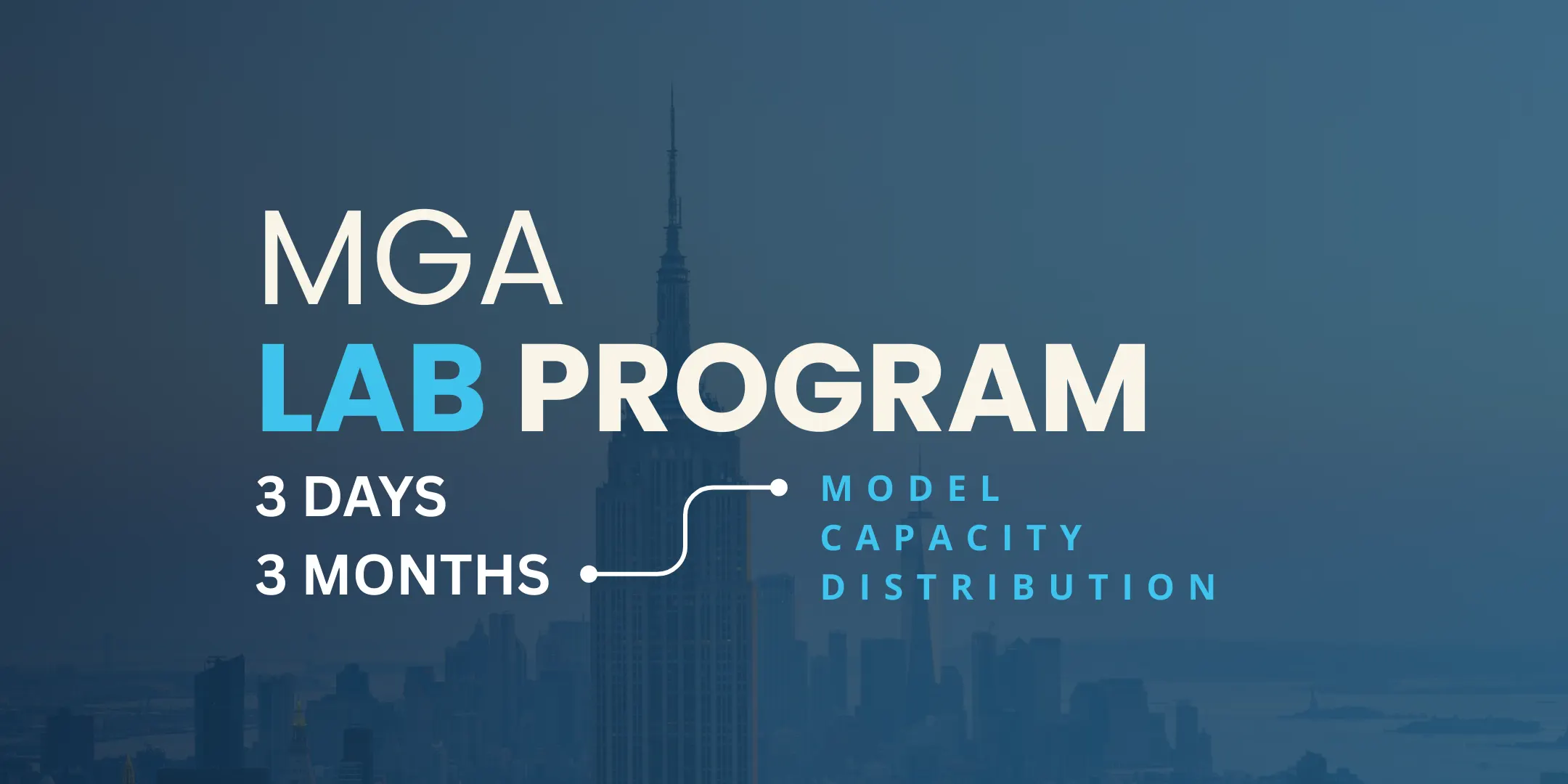
Where Founders Get Help: The InsurTech NY MGA Lab
The InsurTech NY MGA Lab connects founders with carrier & reinsurer mentors, capacity partners, and distribution leaders—so you can pressure-test your thesis and shorten the 12–18 month capacity slog.
This article is adapted (with permission) from insights originally shared by Megan Bingham-Walker, CEO & Co-founder of Anansi, a finalist in the 2024 InsurTech NY Startup Competition. Huge thanks to Megan for crystallizing what many founders learn the hard way.